



For years, grocery shopping ran on autopilot. You reached for what you always bought, maybe glanced at the price, and moved on. In 2026, that rhythm is changing.
Inflation, health concerns, shifting cultural values, and the rise of AI tools have all crept into the aisle. What used to be a low-attention task is starting to demand more thought — and more deliberation.
To find out what's really changing in grocery shopping habits in 2026, Reach3 Insights ran a quick pulse study in February 2026. Are shoppers paying closer attention? Reconsidering what feels “worth it”? Spending more time in-store? And how does AI factor into everyday purchase decisions?
Using an AI-accelerated, conversational research approach and the Rival Technologies platform, we engaged with a nationally representative sample from Rival Group's proprietary panel. The answers point in one direction: routine hasn’t disappeared, but it has been rewritten. And the implications for consumer goods and retail are significant.
How grocery shopping is changing in 2026
Brand experimentation is rising
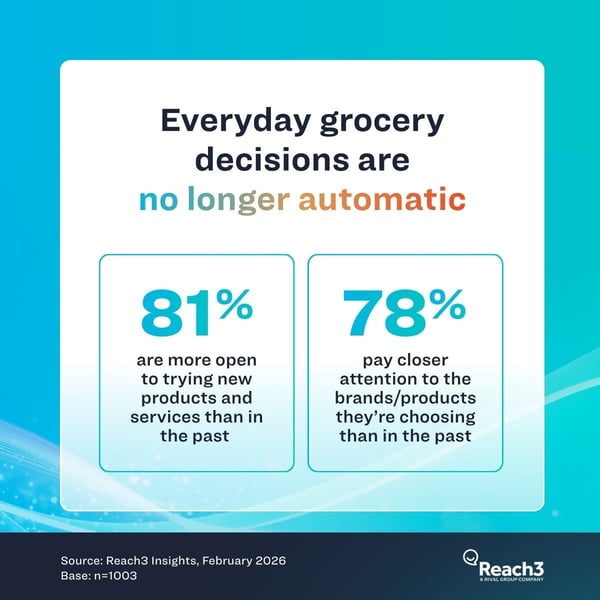
81% of Americans say they are open to trying new grocery brands.
In categories that historically relied on habit and familiarity, that level of openness signals softer brand lock-in and more competition at the shelf. Shoppers aren’t necessarily loyal to what they’ve always bought — they’re curious about what else is out there.
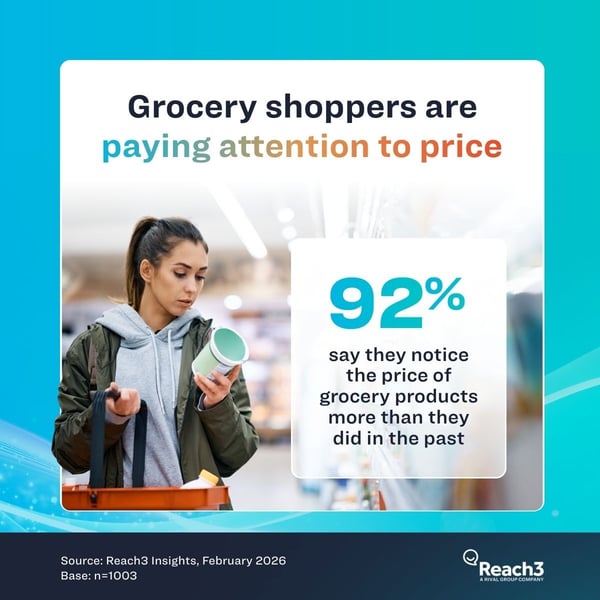
Price awareness is nearly universal
92% say they notice grocery prices more than they did in the past.
78% say they pay closer attention to the brands and products they choose. Price remains a central signal, but today’s shoppers are evaluating more than the sticker. They’re weighing value, trust, and what a brand actually stands for.
Shopping trips are becoming more evaluative
44% say they spend more time in the grocery store than they did previously.
That extra time suggests more comparison, label reading, and in-the-moment trade-offs. What used to be a quick grab-and-go has become a more considered process for nearly half of American shoppers.
Younger shoppers are turning to AI for guidance
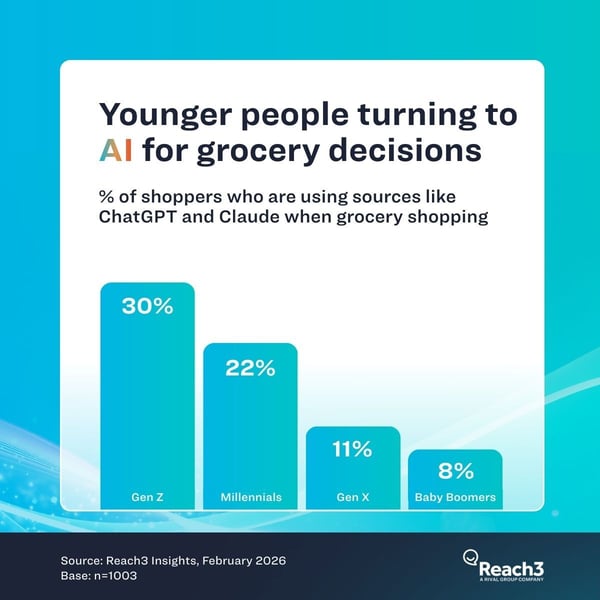
30% of Gen Z and 22% of Millennials say they use generative AI tools when grocery shopping.
That compares with 11% of Gen X and 8% of Baby Boomers. For younger consumers, the grocery aisle has become another touchpoint where digital tools help guide everyday decisions — from comparing nutritional labels to finding alternatives to out-of-stock items.
Why this matters for grocery and consumer goods brands
For decades, many grocery categories ran on something close to cruise control. Shoppers reached for familiar brands without much deliberation, simply out of habit. That dynamic is shifting.
Today’s shoppers are paying closer attention. They’re weighing alternatives, reconsidering brands they once bought automatically, and thinking more carefully about what feels worth it.
Many are still willing to pay for products they trust. The difference is that fewer purchases are happening on autopilot. That creates new pressure for legacy brands to stay a step ahead, while opening the door for challengers to win consideration they couldn’t before.
What Business Leaders Should Do Next
When grocery decisions become more deliberate, the way people discover products — and how they shop — changes with them. Brands need sharper, more continuous insight into what’s driving those decisions.
Ongoing research programs — such as insight communities or a Voice of Market solution — can deliver in-the-moment, high-quality insight on what’s changing and why. Message testing helps identify which benefits or features actually move shoppers, while journey mapping reveals the role different touchpoints play in the path to purchase.
Conversational research is especially well-suited to this moment. When questions unfold like a dialogue rather than a survey, shoppers reveal the small trade-offs, frustrations, and moments of reasoning that shape their choices in the aisle — the details that help brands understand not just what people buy, but how they work through the decision.
What’s Next
This study was a quick pulse check, but it raises bigger questions about grocery shopping trends and consumer behavior in 2026:
-
Which categories are most vulnerable to brand switching?
-
What signals “worth it” to shoppers right now?
-
How are AI tools shaping everyday purchase decisions — and how will that evolve?
As routines continue to shift, solutions like Reach3’s Voice of Market can help brands engage high-quality participants via a certified panel to explore questions like these. If you’re curious how these dynamics are playing out in your category, let’s talk.
Methodology
The survey was conducted in February 2026 among 1,003 nationally representative U.S. adults on Rival Group's proprietary panel. Research was fielded using Reach3 Insights’ conversational research approach, powered by Rival Technologies — a mobile-first platform designed to capture in-the-moment consumer feedback quickly and at scale.