



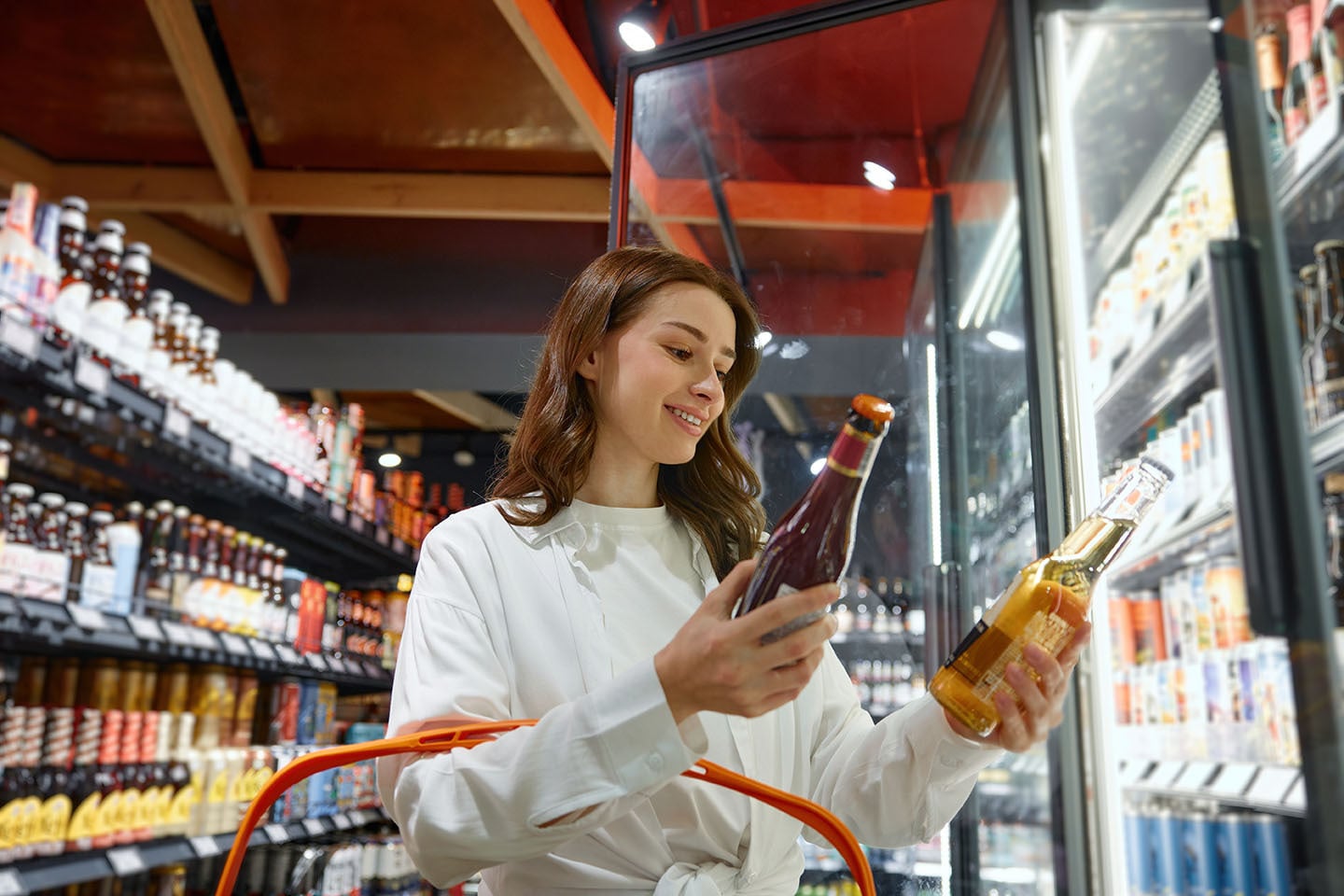
The beverage aisle has become crowded in a relatively short amount of time. Alongside water, soda, coffee, beer and wine, consumers can now choose from functional sodas, electrolyte drinks, mushroom coffee, protein drinks, mocktails, zero-proof spirits, THC beverages, premium teas, hydration mixes and plenty of products that don't fit neatly into one category.
Reach3 Insights estimates that the number of major beverage categories has grown from roughly five in 2019 to more than 20 today. Consumers are drinking across that expanding category set, too. In our recent study, people reported consuming an average of 8.5 beverage categories.
We wanted to understand what sits behind those choices, so we surveyed 2,000 U.S. consumers about everyday and alcoholic beverages using our mobile-first conversational research approach. We explored beverage needs, choice factors, occasions, brands and expectations for the future, using methods including MaxDiff, perceptual mapping, mini-segmentation, visual semiotics, AI probing, photo uploads and video selfies.
A drink has a job to do
Taste topped the list when consumers ranked 24 factors influencing beverage choice. Taste cravings and value also ranked highly, but "I like how the drink makes me feel" came in fourth, ahead of convenience and availability. Fifty-five percent of drinkers said they think about what a beverage does for them, not just how it tastes.
That "job" changes throughout the day. Everyday beverages might hydrate, provide energy, support a health goal or serve as a treat. At home, consumers talked about routine, value, familiarity and control over ingredients and quality. Away from home, convenience and getting through the day become more relevant.
Alcoholic beverages play a somewhat different role. At home, consumers described relaxation, personal enjoyment and controlled indulgence. Away from home, choices become more closely connected with food, atmosphere, social connection and the occasion.
Nearly seven in 10 consumers said they use beverages as a reward, pick-me-up or treat. And when asked about the emotions they associate with beverages, 88% selected a positive emotion.
Consumers want more from the same beverage
One of the clearest tensions in the research was how much consumers expect a single beverage to accomplish.
Everyday beverages need to be healthy and delicious. Consumers still want flavor, sweetness and enjoyment while also looking for lower sugar, cleaner ingredients and better nutrition. With alcoholic beverages, people want indulgence while looking for ways to limit some of its downsides through lower calories, lower ABV or alcohol-free alternatives.
We saw this in "zebra striping," a practice associated with Gen Z that alternates alcoholic and alcohol-free drinks during an occasion. THC beverages also surfaced frequently when consumers uploaded photos of their favorite drinks. Both fit with the idea of controlled indulgence and choosing a beverage based on the desired experience.
Across the study, 81% of drinkers said they're disappointed when a beverage doesn't feel "worth it."
“Worth it” can mean different things depending on the consumer and the moment. Using relative importance data, we identified four personas, each representing roughly a quarter of consumers:
- Purposeful Curators prioritize better-for-you choices, quality and identity;
- Moment Matchers focus more on the social setting and what fits a particular occasion;
- Practical Sippers emphasize value and convenience; and
- Functional Fuelers make choices around health goals and functional benefits.
Interestingly, these groups didn't divide neatly by generation, and all four include consumers across age groups.
Getting closer to the decision for beverage companies
Instead of relying only on structured survey questions, we combined quantitative exercises with open-ended responses, photos and video selfies. When consumers identified a factor as especially influential, we could hear them explain why and ask about experiences behind their answers.
For beverage brands, these same conversational approaches can also be used in the moment and in context, capturing what people are seeing, considering and experiencing as they make choices in stores, restaurants or other real-world settings.
For this study, AI probing helped gather more detail from written responses, including asking consumers to describe the last time something happened. These responses are evaluated using our proprietary Thoughtfulness Score which evaluates open-ended responses across dimensions like relevance, specificity, clarity, emotional engagement and overall depth of insight. Reach3 researchers then used AI Summarizer to organize the unstructured feedback into themes while retaining the ability to review the responses behind each theme.
We also broke the research into phases rather than asking participants to complete one long survey, using SMS to bring them back for the next part. Visual semiotics gave us another perspective, asking consumers to choose images representing how they felt about the future of beverages and using expert-coded semiotics to interpret the emotions associated with those choices.
For beverage teams, these approaches open up questions that can be difficult to answer from preference data alone. What role does a product play in someone's day? Which occasion does it belong in? What does someone expect it to do for them? Does that change at home versus away from home? What makes the experience feel worth the money?
Putting conversational research to work in the beverage sector
Reach3 applies conversational approaches to early-stage innovation, concept screening, immersive Journey Mapping, consumer day-in-the-life research and in-the-moment learning. We can help beverage teams understand the occasions and needs shaping category choice, explore how their brands fit into consumers' lives and get closer to the context behind what people choose and why.
This study also gives us a detailed view of the category today, including "hot or not" data across more than 50 beverage brands and places people get drinks. If you're deciding what to develop, position or test next, we can dig deeper into the findings or design custom research around the questions your team needs to answer.
Watch the Future of Beverage webinar to explore the findings, view the full study report, or get in touch with us to see how these approaches can help answer your brand’s most pressing consumer questions.